
Time
Open Status
ATLAS Library

Common Conditions
New Clients
Book A Consult

The Perils of Inactivity
Details how too much sitting and too little movement affect joints, muscles, and the nervous system over time, and shows how small, consistent changes can reverse that trend and protect long-term health.
Get Your NewsletterAbout The Guide
Sitting still for long periods doesn't just make you stiff — it changes how your spine works. When your body stops moving, your spine settles into a passive position, your posture deteriorates, and the joints that protect your nervous system begin to lose the movement they need to function well. Dr. Ben's letter in this issue explains why inactivity may be more harmful than most people realise, and why even small amounts of movement throughout the day can make a meaningful difference to your spinal health, your energy, and how your nervous system communicates. Inside you'll find:
Inactivity and Your Spine
Dr. Ben explains that sitting is different from — and potentially worse than — a lack of exercise. Even if you walk, go to the gym, or attend yoga, spending hours at a desk or on a sofa can undo much of that effort. Prolonged sitting creates a passive "hang" in your spine, which over time can lead to forward head posture, increased mid-back curvature, and physical changes you may not notice until they become uncomfortable. When spinal joints stop moving properly, the nerves running through them can become irritated — and that affects how your entire nervous system functions. Small, consistent movement breaks are one of the most effective ways to protect your spine.
This issue's new habit is simple: walk more. The research behind walking is striking — 75 minutes a week can add years to your life, 40 minutes three times a week helps protect your brain's memory, 30 minutes a day can reduce depression significantly, and 60 minutes a day can cut obesity risk by half. The issue also offers practical micro-movements you can do throughout the day: move your spine for two to three minutes every time you visit the bathroom, try squatting for one to two minutes ten times a day, and consider alternating between a sitting and standing desk. These aren't dramatic changes — they're small, repeatable actions that help keep your spine mobile and your nervous system well-supported.
Chiropractic care doesn't claim to diagnose or fix specific symptoms. Instead, it focuses on the structure of your body, the flow of your spine, and the tension in your nervous system. When your body reaches a greater state of ease — when joints move well and nerve communication improves — many symptoms tend to resolve on their own. This section explains that your body's natural intelligence does the real work; chiropractic care simply supports that process by reducing interference. Every vertebra needs to move freely in relation to the ones above and below it. When that movement is lost, your nervous system is affected.
This quarter's ATLAS Pick is Garmin — recommended by the team for tracking health metrics like heart rate variability, sleep, and stress levels. Dr. Ben explains how he uses his Garmin watch alongside HRV testing at ATLAS to understand how much stress his nervous system is handling and how well it's adapting. Other recommended devices include Whoop and Oura Ring. The "On Your Behalf" section features Catherine's Puppies, a dog rescue shelter in Ho Chung, Sai Kung, funded entirely by donations. The "What's On" section highlights a free sugar-free workshop with Dr. Ariel, and the 33 Principles of Chiropractic continues with "The Major Premise" and "The Chiropractic Meaning of Life." The lending library features Physical Intelligence by Claire Dale and Patricia Peyton, The Primal Connection by Mark Sisson, and Atomic Habits by James Clear. The visiting artist is photographer Alvin Lee, and the studio playlist is curated by Dr. Ben.
Is This Newsletter Right
for You?
Who This Guide Is For
The Experts
Meet Your Chiropractors
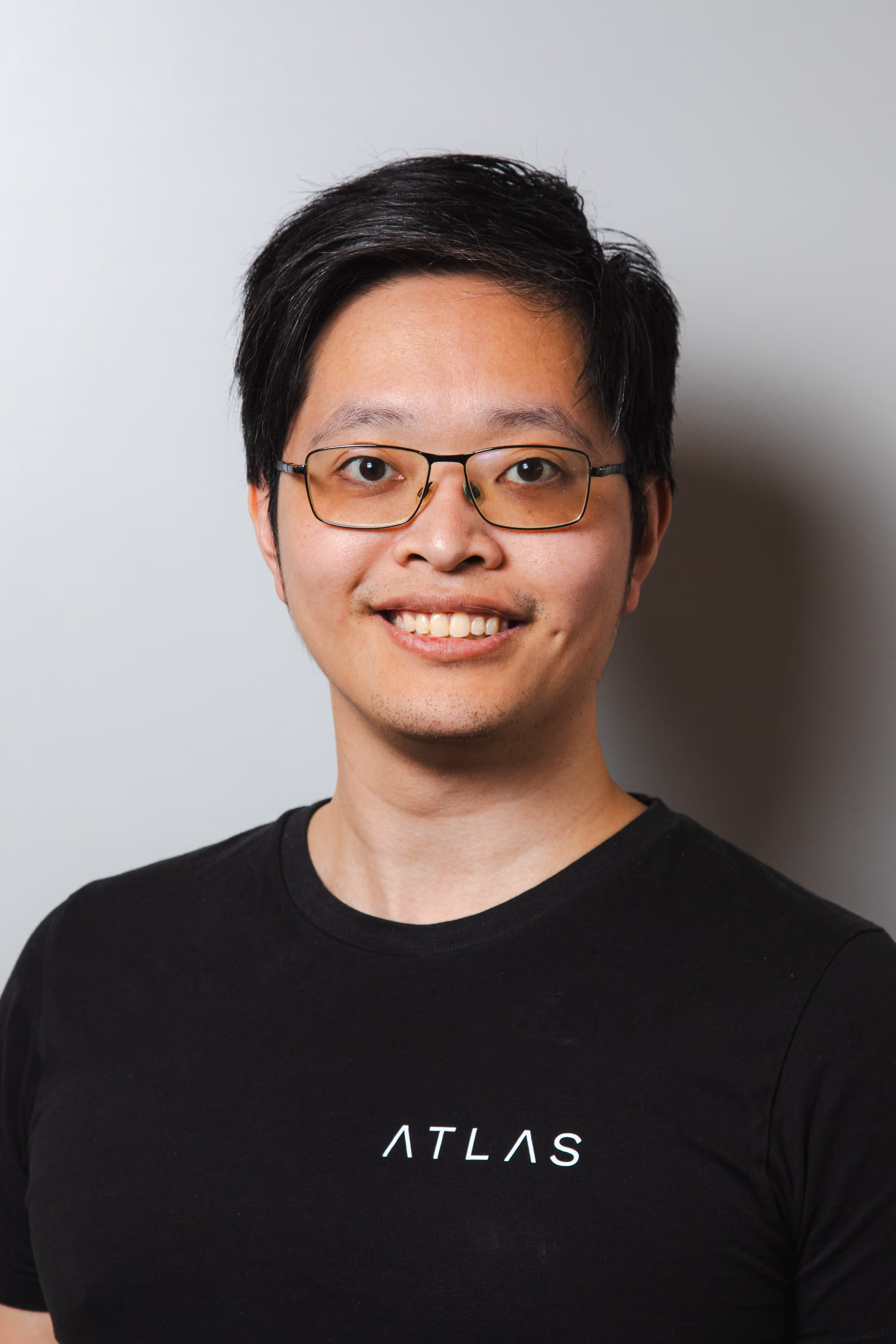
Dr. Bryan Lo
Dr. Bryan Lo is a chiropractor trained at the University of Western States, USA. He received his Doctor of Chiropractic Degree there in 2020. Born in Singapore and lived in Canada before returning to his family's ancestral hometown.
He is deeply committed to holistic health and natural care methods. His mission is to serve as many people as possible, particularly in Hong Kong. During the pandemic, he participated in various healthcare missions worldwide, witnessing the challenges communities face in accessing healthcare. He has seen the devastating effects of chronic pain and substance dependency. Thus, he promotes chiropractic care as a first resort before taking irreversible or dependency-inducing steps.
In his free time, Dr. Bryan enjoys rock climbing. He is known for his positivity and genuine approach.
"Empowering individuals to take control of their health through natural methods is my mission. The ability to alleviate chronic pain and improve quality of life through chiropractic care is profoundly rewarding."
He is deeply committed to holistic health and natural care methods. His mission is to serve as many people as possible, particularly in Hong Kong. During the pandemic, he participated in various healthcare missions worldwide, witnessing the challenges communities face in accessing healthcare. He has seen the devastating effects of chronic pain and substance dependency. Thus, he promotes chiropractic care as a first resort before taking irreversible or dependency-inducing steps.
In his free time, Dr. Bryan enjoys rock climbing. He is known for his positivity and genuine approach.
"Empowering individuals to take control of their health through natural methods is my mission. The ability to alleviate chronic pain and improve quality of life through chiropractic care is profoundly rewarding."
Area Of Expertise
Blends US expertise with Eastern principles
Specializes in office worker preventive care
Language
English
Cantonese
Mandarin
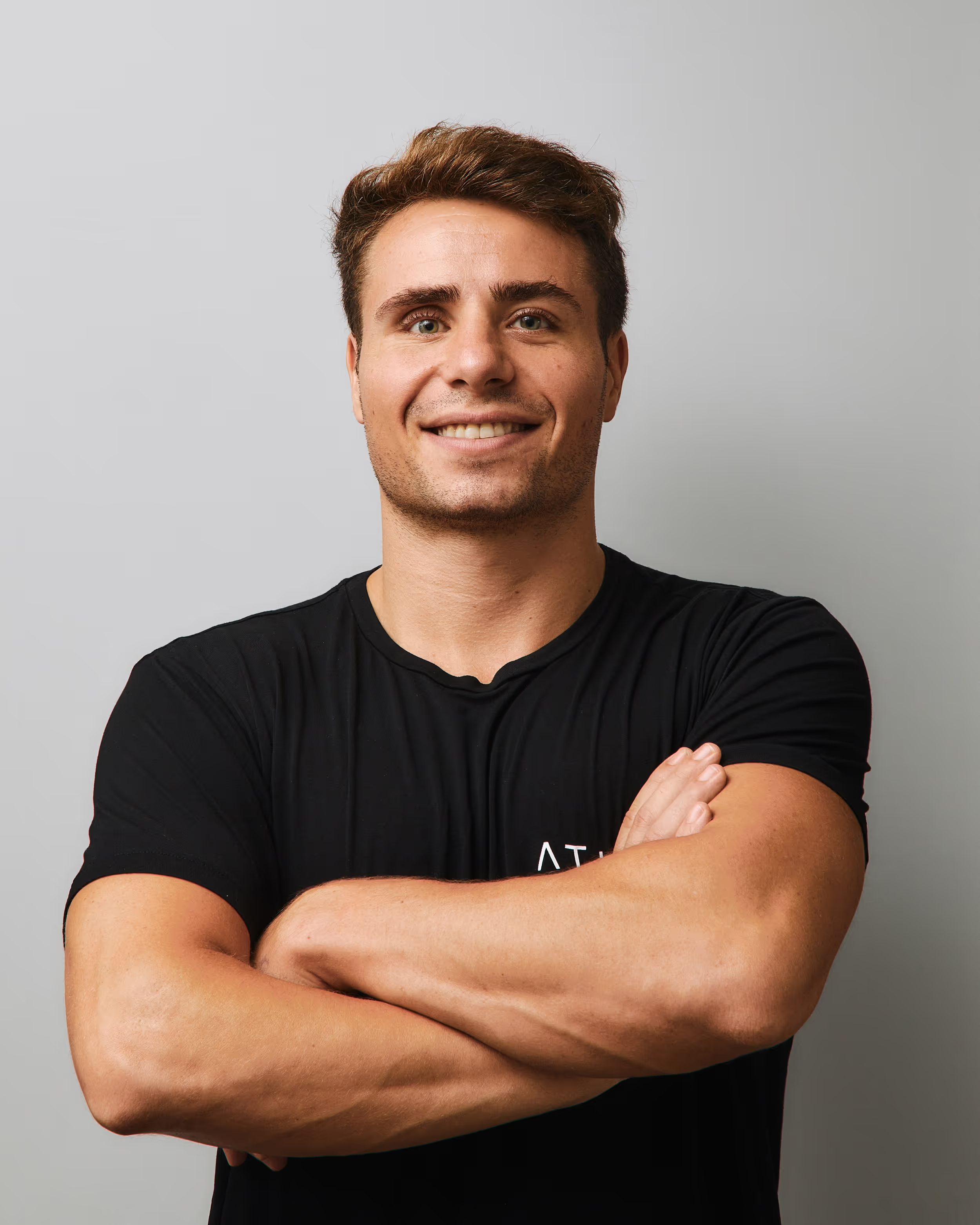
Dr. Damian Le Roux
With a passion for his profession that's as strong as when he first started, Dr Damian brings 12 years of experience to ATLAS.
He received his Masters Degree in Chiropractic at AECC (Anglo European Chiropractic College) in 2012. His expertise spans an array of care modalities, from diverse chiropractic techniques to specialised extremities dysfunctions. Away from ATLAS, Dr Damian is a dynamo on the rugby field, an enthusiastic advocate for holistic health, and a proud dad of two. He shares his love for healthy, daily routines with his wife, an osteopath. Originally from the UK, he now calls HK home and loves every minute of it.
Straightforward and direct, Dr Damian's approach to health is simple: it's a journey, not a destination. His mantra?
“Health is a journey and not a destination. To create the results you want in life, you need consistency, frequency and time”
He received his Masters Degree in Chiropractic at AECC (Anglo European Chiropractic College) in 2012. His expertise spans an array of care modalities, from diverse chiropractic techniques to specialised extremities dysfunctions. Away from ATLAS, Dr Damian is a dynamo on the rugby field, an enthusiastic advocate for holistic health, and a proud dad of two. He shares his love for healthy, daily routines with his wife, an osteopath. Originally from the UK, he now calls HK home and loves every minute of it.
Straightforward and direct, Dr Damian's approach to health is simple: it's a journey, not a destination. His mantra?
“Health is a journey and not a destination. To create the results you want in life, you need consistency, frequency and time”
Area Of Expertise
UK-trained Clinical Director (12+ years)
Family-focused evidence-based techniques
Resolves chronic pain & complex cases
Language
English
Frequently Asked Questions
Questions People Ask
About The Ebook
What is included in the guide?
.avif)
Each guide is written by our chiropractic team and includes clear explanations, helpful tips, and practical steps you can begin using right away. The goal is to help you better understand your symptoms and support your overall wellbeing.
How do I use the guide?
You can read it at your own pace and follow the steps whenever you feel comfortable. Many people start by applying the simple daily habits and movements recommended inside.
Is the information suitable for everyone?
The content is designed for general education and is suitable for most people. If you have severe symptoms or a complex health condition, we recommend seeking personalised advice.
Will the guide replace a consultation?
No — the guide is meant to help you understand your body and support healthy habits. A consultation allows our chiropractors to assess your specific needs in detail.
Can I share the guide with someone else?
Absolutely. If you know someone who may benefit, feel free to share the link so they can access the guide themselves.
Start Moving Your Spine Again
Inactivity doesn't just make you stiff — it changes how your spine and nervous system function over time. Download the guide to learn what small daily habits can make the biggest difference, or reach out to the ATLAS team to explore what a structured spinal assessment could reveal about how your body is adapting to the way you live.
Oops! Something went wrong while submitting the form.


x
Get The
The Perils of Inactivity
Guide
Start understanding your spine and take the first step toward lasting relief.