Is Scoliosis a Disability? What It Means in Daily Life (and When to Get Help)

A parent notices their child's shoulders are uneven during school photos. A student hears the word scoliosis during a screening and immediately starts imagining the worst. An adult feels persistent back tension, sees one shoulder sitting higher than the other, and begins searching for answers late at night. A common question follows: Is scoliosis a disability? For many people, the concern is not only about the diagnosis itself, but what it could mean for work, school, movement, and long-term function.
The answer is not always simple, and that is why the topic creates so much uncertainty. Scoliosis can range from a mild structural change in the spine to a curve that noticeably affects posture, endurance, and comfort during daily routines. Some people live with it for years and rarely think about it. Others begin noticing changes when sitting through a workday, carrying a bag, or standing for long periods. Understanding what scoliosis actually means in practical terms can help replace fear with clearer expectations.
Is Scoliosis a Disability or a Structural Condition?
Scoliosis is first a structural condition of the spine, not automatically a disabling one. It describes a sideways curvature of the spine that often includes rotation, meaning the vertebrae twist slightly as the curve forms. According to the National Institute of Arthritis and Musculoskeletal and Skin Diseases, scoliosis affects about 2 to 3% of the population, most commonly appearing during adolescence. Because the condition is relatively common, most cases do not lead to major functional limitation.
A key distinction is between having scoliosis and being disabled by scoliosis. A diagnosis simply confirms that a curve exists in the spine. Disability refers to whether a curve significantly limits a person's ability to move, work, or carry out everyday activities consistently. Many people with scoliosis continue normal routines, maintain active careers, and participate in sports or exercise without major restrictions.
Why Most People Who Ask Is Scoliosis a Disability Have Mild Curves
Most scoliosis cases fall into the mild category and do not interfere with normal activities. These curves are often discovered during school screenings, posture checks, or imaging done for unrelated reasons. Our paediatric chiropractic assessment provides a structured approach for adolescents identified with scoliosis during growth phases, helping establish a clear baseline before any decisions are needed.
How Spinal Curvature Changes Posture and Body Balance
Even a mild curve can influence posture. One shoulder may sit higher than the other, the waist may appear uneven, or one hip may shift slightly forward. Think of the spine like a tower of blocks. If one block moves slightly to the side, the rest of the structure adjusts to keep the tower upright and balanced.
Why Nervous System Stress Can Influence Symptoms
The spine protects the spinal cord and supports communication between the brain and body. When spinal alignment changes, surrounding muscles and joints may compensate to maintain stability. Over time, this additional effort can lead to fatigue or tightness in the neck, shoulders, or lower back during long periods of sitting or standing.
When Is Scoliosis Considered a Disability in Daily Life?
Most people with scoliosis never experience disability. In practical terms, scoliosis is considered disabling only when it significantly interferes with everyday activities such as walking, standing, breathing, or maintaining posture for extended periods.
Functional limitation is the key factor. A moderate curve may have little effect on one person's life but create noticeable fatigue for another whose body must work harder to stay balanced. This difference often depends on how the spine distributes weight and how muscles support posture during daily activity.
How Mobility Limitations Influence the Question: Is Scoliosis a Disability?
When scoliosis begins affecting movement, routine activities may become harder to sustain. Walking long distances, standing through a work shift, or maintaining posture during travel may require more effort. These types of functional limitations are what clinicians consider when evaluating whether scoliosis could be disabling.
When Scoliosis Begins Affecting Sitting Tolerance, Walking Endurance, and Everyday Movement
Symptoms are often first noticed in ordinary situations. Sitting through a full day of school or office work may lead to fatigue in the back or shoulders. Long drives may become uncomfortable sooner than expected. Walking across large workplaces or campuses may feel more tiring because the body constantly adjusts to maintain balance. For clients whose posture is being affected across daily life, our posture and structural assessment helps identify how load is being distributed and what can be done to support long-term function.
Why Functional Limitations Matter More Than Diagnosis Alone
Two people with scoliosis can have very different daily experiences. One person may remain active in sports and training with minimal symptoms. Another may struggle with posture fatigue or discomfort during routine tasks. This is why disability classifications focus on what the body can sustain during daily life rather than the diagnosis alone.
Understanding Scoliosis Severity and Curve Progression
Scoliosis severity is commonly measured using the Cobb angle, which determines the degree of spinal curvature on imaging. The Scoliosis Research Society groups scoliosis roughly into mild, moderate, and severe categories. While these ranges guide clinical decisions, the measurement alone does not fully explain how someone will feel during everyday life.
The body experiences scoliosis through posture, movement, and muscle balance rather than through measurements alone. Two people with similar curves may experience very different symptoms depending on where the curve occurs and how the body compensates.
Mild Scoliosis and Early Structural Changes
Mild curves usually measure under 20 degrees. Most people with mild scoliosis continue normal routines without noticeable limitation. The most visible signs may be small posture differences, such as uneven shoulders or a slightly tilted waistline.
Moderate Curvature and Muscular Compensation Patterns
Moderate curves typically range between 25 and 40 degrees. At this stage, posture changes may become more noticeable, and surrounding muscles may work harder to stabilize the spine. Fatigue after long periods of sitting, studying, or working is more common.
Severe Scoliosis and Long-Term Spinal Stress on Breathing, Mobility, and Endurance
Severe curves above 45 to 50 degrees may influence how the rib cage moves during breathing. Because the ribs attach to the spine, vertebral rotation can alter how the rib cage expands. In some cases, this may affect endurance during physical activity.
Why Two People With Similar Curve Measurements May Experience Different Symptoms
Curve location also matters. A curve in the upper back may influence rib movement and breathing, while a curve in the lower spine may affect posture and walking mechanics. Muscle strength, activity level, and daily habits also influence how the body responds.
How Severe Does Scoliosis Have to Be to Be Considered a Disability?
Severity alone does not determine disability status. Organizations such as the Social Security Administration evaluate disability based on how much a condition limits everyday function and work capacity.
Why Spinal Curve Degree Alone Does Not Determine Disability
Measurements describe spinal structure but not the entire experience of living with scoliosis. Muscle balance, posture tolerance, and spinal rotation influence how the body adapts.
How Functional Limitation Affects Disability Classification
For scoliosis to be considered disabling, it usually must significantly restrict mobility, breathing, endurance, or the ability to maintain posture during daily tasks.
When Severe Scoliosis May Influence Breathing Capacity, Mobility, and Endurance
Very large curves can alter rib cage movement and reduce lung expansion. These situations are uncommon but demonstrate how spinal structure can affect overall function when curves become significant.
When to Seek Help if You Are Worried About Scoliosis
Most people with scoliosis do not require extensive care, but certain changes can signal that the body is under increasing strain. Seeking guidance does not necessarily mean the condition is severe. It simply means understanding what the spine is doing rather than guessing.
People often seek help when posture changes become more visible or when routine activities feel more tiring than before. Signs that may suggest a professional evaluation would be useful include:
- Persistent back or neck discomfort that does not improve
- Visible posture changes, such as uneven shoulders or hips
- Reduced endurance during walking, exercise, or daily activity
- Fatigue after sitting or standing for long periods
These signs do not automatically mean the curve is worsening, but they suggest that a professional evaluation could provide useful clarity.
How Professionals Assess Whether Scoliosis Is Disabling
Understanding scoliosis requires more than simply identifying the curve. Assessment focuses on how the spine, posture, and nervous system interact during normal movement and daily activity. At ATLAS, evaluation begins with the principle that care should be guided by measurement rather than assumption.
Postural Evaluation and Spinal Asymmetry
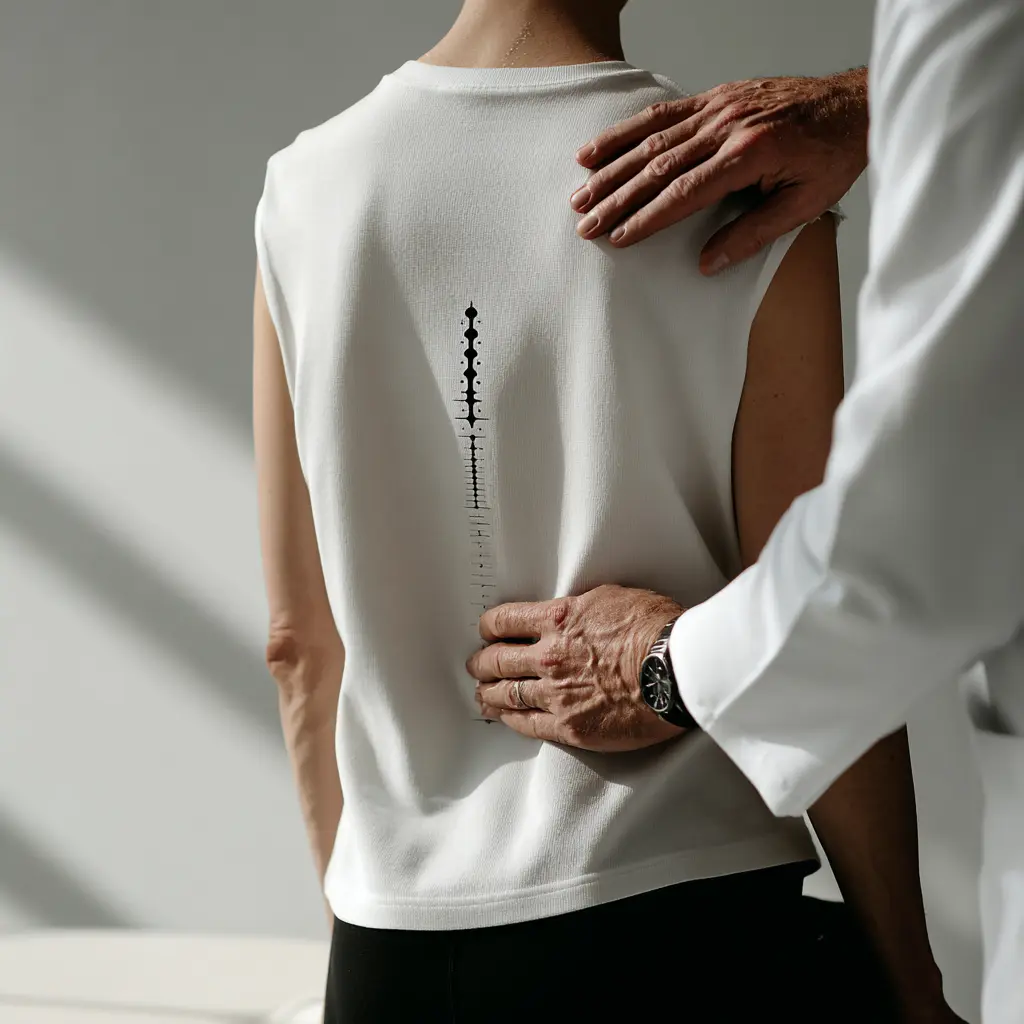
Postural evaluation helps identify uneven shoulders, pelvic tilt, spinal rotation, and other alignment patterns. These findings reveal how the body distributes weight during standing and movement.
Structural Scans That Measure Alignment and Spinal Balance
Modern scanning tools can show how the spine aligns with the body's centre of gravity. This information helps clinicians understand how load moves through the spine during posture and movement.
Tracking Spinal Changes Over Time to Monitor Curve Progression
Monitoring allows clinicians to compare findings across time. Instead of guessing whether a curve is changing, follow-up assessments reveal whether posture patterns remain stable or gradually evolve.
Can You Work Normally if You Have Scoliosis?
Most individuals with scoliosis continue working and maintaining active lifestyles. Research examining physical capacity in people with mild and moderate idiopathic scoliosis found that individuals with mild curves had similar physical capacity to those without scoliosis, while moderate curves showed only modest reductions in exercise tolerance.
Work conditions can still influence comfort. Desk jobs may challenge posture endurance, while physically demanding roles may require careful lifting mechanics. Recognising these demands helps people manage spinal stress more effectively.
Why Many People With Scoliosis Continue Working Without Major Limitations
A scoliosis diagnosis does not usually prevent someone from building a career or maintaining independence. Many individuals continue normal routines for decades with minimal disruption.
How Job Demands Such as Prolonged Sitting, Standing, or Lifting Influence Comfort
Jobs requiring long hours of sitting may create upper-back fatigue, while physically demanding roles can increase strain on spinal muscles.
When Workplace Adjustments or Posture Support May Improve Daily Function
Ergonomic chairs, improved desk setups, and better lifting techniques can reduce fatigue and support long-term comfort.
Does Scoliosis Always Get Worse Over Time?
Scoliosis progression varies widely. Some curves remain stable for many years, particularly after skeletal growth is complete. Others may change gradually because of posture stress, aging, or spinal degeneration.
Understanding progression requires observation rather than assumption. A single scan shows the spine at one moment in time. Monitoring across months or years provides a clearer picture of whether structural changes are occurring.
Why Some Spinal Curves Remain Stable for Many Years
Many adults live with scoliosis for decades without significant change. Stability is common once growth phases are complete.
Growth Phases, Posture Stress, and Curve Progression
During adolescence, rapid growth can influence curve development. In adulthood, posture habits and spinal health play a larger role.
Why Monitoring Spinal Structure Can Help Detect Early Changes
Regular evaluation allows clinicians to detect structural changes early and recommend appropriate guidance when needed.
Can scoliosis qualify for disability benefits?
Yes, but only in specific situations. Disability benefits are typically granted when scoliosis significantly limits a person's ability to perform normal work or daily activities. Organizations such as the Social Security Administration evaluate how the condition affects mobility, breathing capacity, endurance, and the ability to maintain posture during routine tasks. In most cases, mild or moderate scoliosis does not qualify because people can still function normally. Disability classification usually requires documented evidence that the spinal condition creates substantial functional limitations.
How severe does scoliosis have to be to be considered disabling?
There is no single curve measurement that automatically makes scoliosis disabling. Clinicians look at how the spinal curve affects the body as a whole rather than focusing only on the Cobb angle. Severe curves, often above 45 to 50 degrees, are more likely to influence breathing mechanics, mobility, or posture endurance. However, disability is typically determined by how much the condition limits everyday function, such as walking long distances, standing for extended periods, or performing work duties consistently.
Can adults develop symptoms from scoliosis later in life?
Yes, adults can begin noticing symptoms even if their scoliosis was mild earlier in life. Over time, posture stress, spinal degeneration, and muscle imbalance can make the curve more noticeable. People may start experiencing back fatigue, uneven muscle tension, or reduced tolerance for prolonged sitting or standing. In many cases, the curve itself has not dramatically changed, but the body's ability to compensate has shifted, making the condition more noticeable during daily routines.
Sources
PubMed Central — A Twin Study on the Heritability of Scoliosis. Retrieved from https://pmc.ncbi.nlm.nih.gov/articles/PMC3366128/
U.S. Social Security Administration (SSA) — Blue Book, Section 1.00 Musculoskeletal Disorders. Retrieved from https://www.ssa.gov/disability/professionals/bluebook/1.00-Musculoskeletal-Adult.htm
Scoliosis Research Society (SRS) — Scoliosis. Retrieved from https://www.srs.org/Patients/Conditions/Scoliosis
NIAMS — Scoliosis in Children and Teens. Retrieved from https://www.niams.nih.gov/health-topics/scoliosis
Final Thoughts
So, is scoliosis a disability? In most cases, the answer is no. Many people with scoliosis live active lives without major limitations, maintain careers, and participate in everyday activities normally. When spinal curvature begins affecting posture, endurance, breathing, or mobility, however, it deserves closer attention.
At ATLAS, care begins with a detailed structural assessment so clients understand what their spine is actually doing. We assess, we don't guess. By measuring posture, alignment, and nervous system function, ATLAS helps clients see whether their scoliosis is stable and what steps may support long-term spinal health. If you are wondering whether is scoliosis a disability applies to your situation, booking a professional assessment at ATLAS can provide clarity and guidance for the next step.